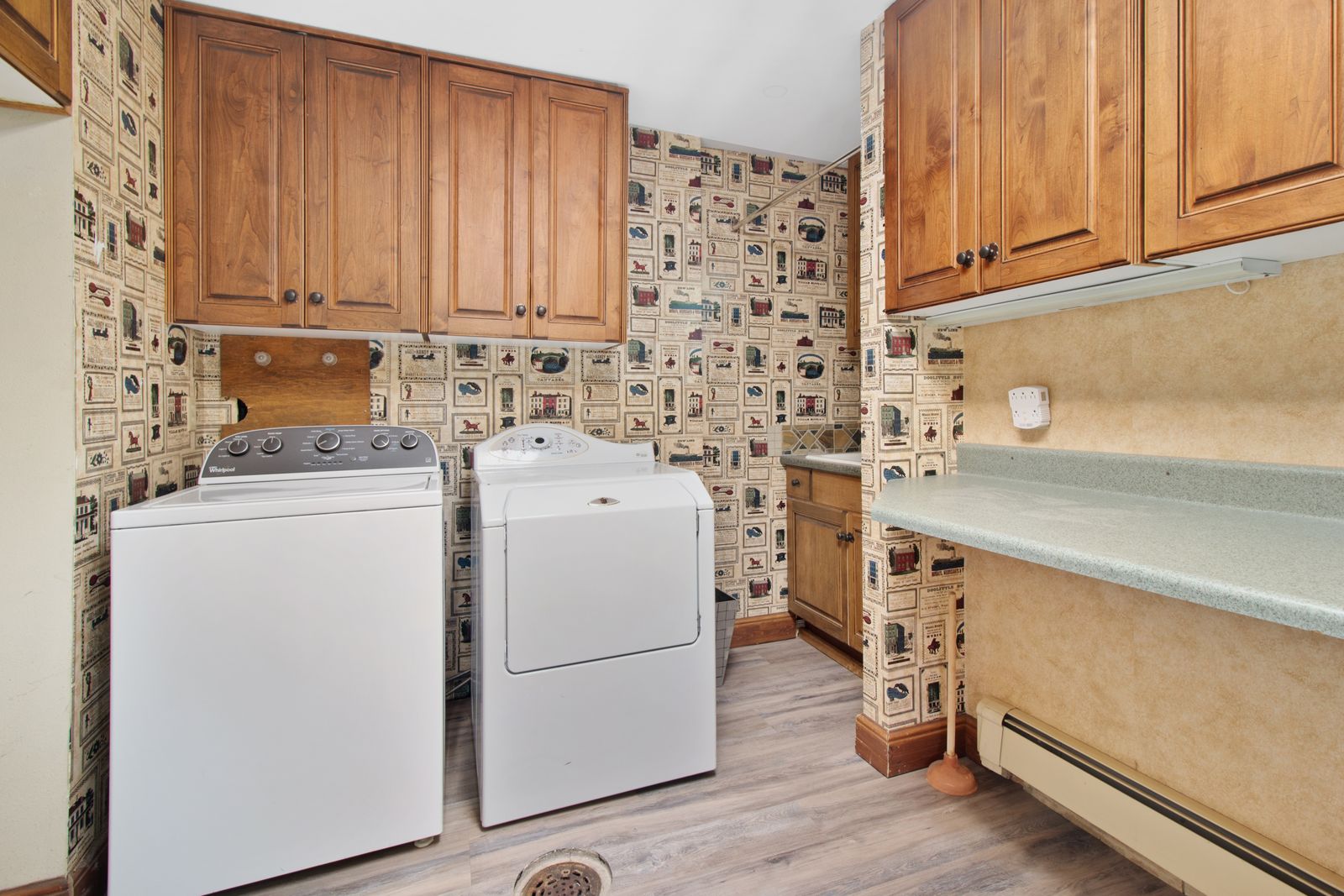
The basement is where a lot of drain trouble shows up first, even when it starts somewhere else. The floor drain sits at the lowest point of the plumbing, and the laundry standpipe takes a large volume of water in a short burst, so both are quick to reveal a problem in the line.
We connect Etters homeowners with local technicians who deal with basement drains every week, in older borough homes and in township houses built with full basements. One call gets a pro out to work out whether you have a local clog, a smell from a dry trap, or a backup coming from the main, and to clear it with the right approach.
Laundry drain backing up: lint and standpipe overflows
A washing machine empties dozens of gallons in a few minutes through a narrow standpipe, a vertical pipe the drain hose hooks into. If the trap below it or the line beyond is partly blocked, the standpipe cannot keep up, and water spills over the top. A washing machine drain overflow that happens only during the spin or drain cycle is the classic sign.
Lint is the usual cause. Fibres from towels and clothing pass the washer's filter and gather in the trap and line, binding with detergent residue into a felt-like plug. Laundry sinks that take the washer's discharge can collect the same mat. A tech clears the standpipe trap and the line beyond with a cable, then runs a test drain to make sure the pipe can take the full flow.
Ask the technician whether a lint catcher on the washer hose suits your setup. It slows the next build-up, but it does not clear a line that is already narrowed.
Basement floor drain clog and backups
A floor drain has its own trap under the grate, connected to the main line below the basement floor. A basement floor drain clog can come from debris swept into the grate, sediment or lint that settled over time, or a blockage further along the line.
The important question is which way the water is moving. Water that will not go down the floor drain is often a local clog. Water coming up out of the floor drain, especially when a toilet is flushed or the washer drains elsewhere, means the main is restricted downstream. Clearing the floor drain alone will not fix that. The tech checks other fixtures first and, if the main is the cause, moves to emergency drain cleaning priorities: stop the water, open the main, then look at why.
Dried-out traps and floor drain smells
A sewer smell from a floor drain that is rarely used is often not a clog at all. The trap under the grate is meant to hold water as a seal against sewer gas. In a basement where nothing drains into it for weeks, that water slowly evaporates and the seal is lost.
A technician refills the trap and checks that it holds water. If it keeps drying out or the smell comes back quickly, the trap may be cracked or the drain may have a different problem, and that is worth a closer look. A smell that comes with slow drains elsewhere points back to the main line.

Low-lying basements and storm-season backups
Some homes notice floor drain trouble mostly during long, heavy rain. When the ground is saturated, extra water can find its way into drain lines through cracks or old joints, and a line that copes in dry weather struggles. Homes on lower ground or with older laterals tend to notice it first.
A tech cannot change the weather, but they can make sure your own line is clear and, with a camera, show whether cracks or open joints in the house drain are letting water in. If storm-season backups are a regular pattern, that is a conversation worth having on a dry day rather than during the next downpour.
Backwater valves explained
A backwater valve is a one-way flap fitted in the main drain line. It lets water leave the house but closes if water tries to flow back in. Some homes have one; many do not.
Whether a backwater valve suits a particular house depends on how it is plumbed, where the floor drain and fixtures sit, and the layout of the line. If you already have one, it needs occasional cleaning so the flap does not stick. If you are wondering about adding one, the technician can explain how it would work with your plumbing.
Floor drain cleaning in Etters homes
Older homes near the river, the kind behind many calls for drain cleaning in Goldsboro, often have floor drains tied into original lines and sometimes an old house trap near the front wall. Those can collect sediment and are worth checking when the floor drain is slow.
The township subdivisions built between the 1970s and the 2000s nearly all have basements with a floor drain near the laundry and a standpipe for the washer. Lint-packed laundry lines and floor drains that show a main-line backup first are everyday calls there. A slow kitchen line upstairs can add to the load too, and kitchen drain cleaning is sometimes part of the same visit.
Newer homes on the Fairview Township side, the area covered by drain cleaning in Fairview Township, may have laundry on the main floor rather than in the basement, which changes where an overflow shows up. On septic properties, the floor drain and laundry lines are cleared inside the house the same way.
Basement drains are often where a wider problem shows first, so the drain cleaning Etters overview is a good place to compare symptoms across the house.
While you wait
- Stop running the washer and any other water in the house if the floor drain is backing up.
- Do not pour chemical cleaner into the floor drain or standpipe.
- Keep children and pets away from water on the basement floor.
- Move boxes, rugs and valuables away from the floor drain.
- Note whether water comes up when other fixtures are used.
Smell gas? Leave the house and call the gas utility and 911 from outside.